Passer aux informations produits
1 de 1
Œuvre en exclusivité dans notre galerie d'art !

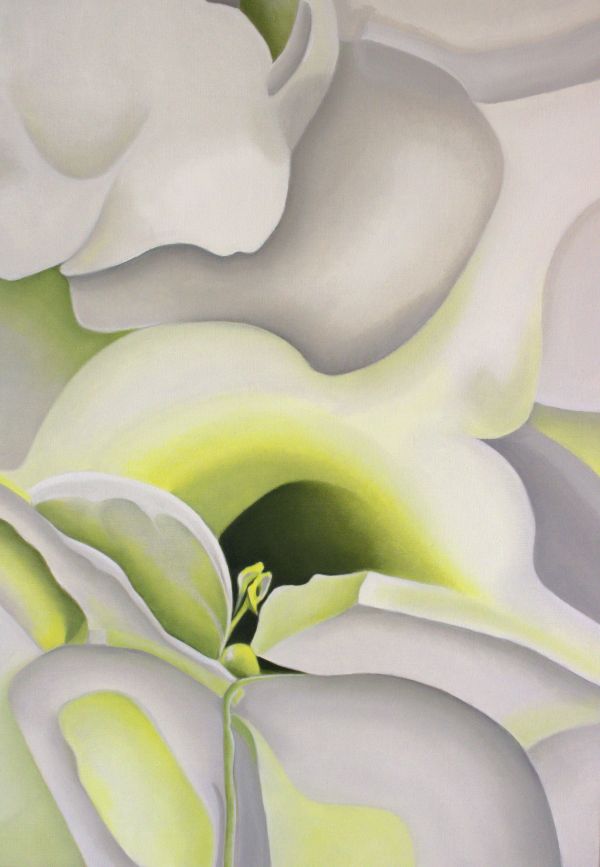
SPRINGTIME IN PARIS 21

SPRINGTIME IN PARIS 21

États-Unis d’Amériques

JChadima

Peinture

Style : Abstrait

Huile, Toile de lin, 2025

92 cm x 65 cm

Prix habituel €6.500,00 EUR
Prix habituel Prix promotionnel €6.500,00 EUR
Promotion Vendue
Taxes incluses. Frais d'expédition calculés à l'étape de paiement.

Envois & Retours

  • Livraison professionnelle dans le monde entier, contrôlée par nos experts logistiques
  • Les frais d'expédition, taxes et frais de douane sont inclus dans le prix

Garantie

Horizon World Art garantit fiabilité et traçabilité.

Tous les artistes de la plateforme ont été spécialement sélectionnés et certifient ne vendre que des œuvres dont ils sont les auteurs. Quel que soit le support, l'œuvre est envoyée à l'acheteur avec un certificat d'authenticité. Les photographies sont numérotées et signées.

Chaque client peut recevoir une copie de son certificat d'authenticité en contactant contact@horizonworldart.com

Paiement

Avec Horizon World Art, vous pouvez payer en toute sécurité par carte bancaire ou virement bancaire.

Pour toutes transactions dépassant votre limite de crédit, contactez-nous. Nous sommes tenus de vérifier chaque transfert, dans le cadre de la lutte contre la fraude et le blanchiment d'argent.

Prix

Les prix Horizon World Art incluent ce qui suit :

  • Prix d'une œuvre défini par un artiste
  • Assurance. Votre commande est protégée à 100% en cas de dommages ou de perte
  • Préparation des frais de douane, des taxes et des documents
  • Frais d'expédition du prestataire logistique
  • Un spécialiste du service client Horizon World Art qui répondra à toutes vos questions ou préoccupations lors de l'expédition
Œuvre unique signée Avec certificat d'authenticité
Livraison A l'international par des spécialistes
Paiement sécurisé Carte bancaire avec cryptage SSL
Afficher tous les détails

A propos de l'oeuvre

SPRINGTIME IN PARIS 21

The Springtime in Paris series began in 2024, originating in JChadima’s photographic observations of the seasonal planting of hybrid white amaryllis in Paris. The flowers’ extraordinary scale and exotic presence became a recurring source of fascination, particularly because their emergence occurs during the winter months, when the surrounding landscape is often subdued and dormant.

The amaryllis provides a compelling natural structure through which JChadima explores the relationship between organic form, light, colour, scale, and perception. The large architectural petals and dramatic silhouettes are observed closely and then transformed through abstraction, allowing the recognizable flower to become a more fluid arrangement of curves, layered forms, and shifting spatial relationships.

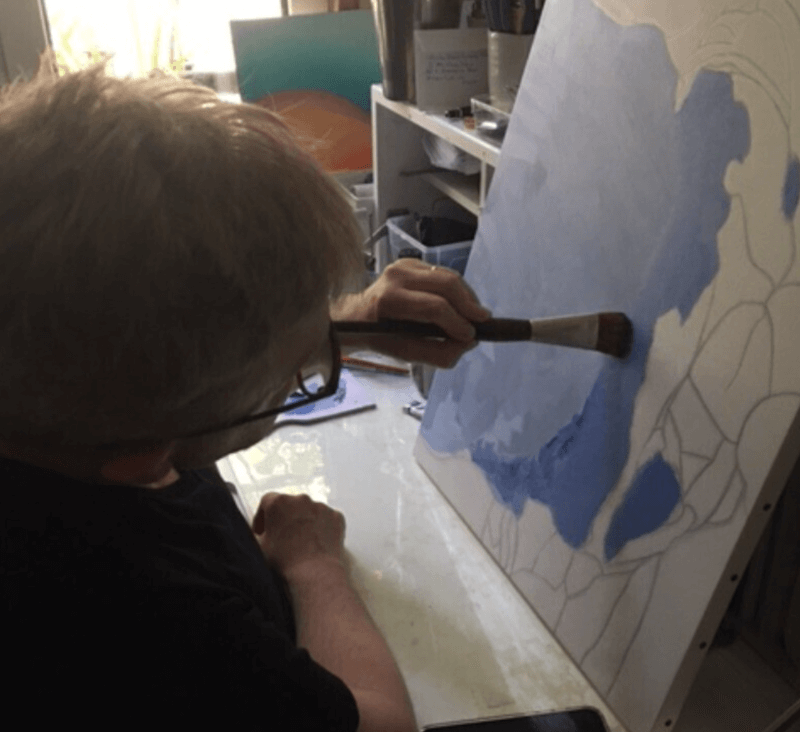
As in JChadima’s broader practice, observation becomes transformation. The photographic image serves as the initial encounter, but the painting moves beyond documentation. The essential characteristics of the amaryllis—its scale, rhythm, curvature, and unfolding structure—are extracted and reinterpreted through colour, line, light, and abstraction.

The seasonal cycle is central to the meaning of the series. The amaryllis is planted during winter and cultivated in anticipation of its eventual flowering. Its emergence becomes a visual interruption within the darkness of the season—a concentrated expression of vitality and renewal. For JChadima, this process parallels the act of painting itself: continuing to observe, imagine, and create even when the surrounding environment appears dormant.

The Springtime in Paris series therefore extends beyond botanical observation. The flowers become symbols of anticipation and creative persistence, while their transformation into abstract compositions reflects his desire to discover beauty within simple, often overlooked encounters with nature.

Across the series, the amaryllis becomes less a specific flower than a vehicle for exploring the transition from winter to spring—from dormancy to emergence, darkness to light, and observation to creative transformation.

“Even in the depths of winter, nature prepares its next unfolding.”


Provenance:

CERTIFICATE OF AUTHENTICITY N° 20260525031008 | REFERENCE/ISNI : 2025-05

AKOUN CERTIFIED : 6500 Euros

Exhibitions :

2024 CARROUSEL DU LOUVRE, PARIS
À propos de l’œuvre

SPRINGTIME IN PARIS 21

The Springtime in Paris series began in 2024, originating in JChadima’s photographic observations of the seasonal planting of hybrid white amaryllis in Paris. The flowers’ extraordinary scale and exotic presence became a recurring source of fascination, particularly because their emergence occurs during the winter months, when the surrounding landscape is often subdued and dormant.

The amaryllis provides a compelling natural structure through which JChadima explores the relationship between organic form, light, colour, scale, and perception. The large architectural petals and dramatic silhouettes are observed closely and then transformed through abstraction, allowing the recognizable flower to become a more fluid arrangement of curves, layered forms, and shifting spatial relationships.

As in JChadima’s broader practice, observation becomes transformation. The photographic image serves as the initial encounter, but the painting moves beyond documentation. The essential characteristics of the amaryllis—its scale, rhythm, curvature, and unfolding structure—are extracted and reinterpreted through colour, line, light, and abstraction.

The seasonal cycle is central to the meaning of the series. The amaryllis is planted during winter and cultivated in anticipation of its eventual flowering. Its emergence becomes a visual interruption within the darkness of the season—a concentrated expression of vitality and renewal. For JChadima, this process parallels the act of painting itself: continuing to observe, imagine, and create even when the surrounding environment appears dormant.

The Springtime in Paris series therefore extends beyond botanical observation. The flowers become symbols of anticipation and creative persistence, while their transformation into abstract compositions reflects his desire to discover beauty within simple, often overlooked encounters with nature.

Across the series, the amaryllis becomes less a specific flower than a vehicle for exploring the transition from winter to spring—from dormancy to emergence, darkness to light, and observation to creative transformation.

“Even in the depths of winter, nature prepares its next unfolding.”


Provenance:

CERTIFICATE OF AUTHENTICITY N° 20260525031008 | REFERENCE/ISNI : 2025-05

AKOUN CERTIFIED : 6500 Euros

Exhibitions :

2024 CARROUSEL DU LOUVRE, PARIS

fallback text for a video
A propos de l'artiste Jchadima

JChadima (James Chadima) is a Paris-based multidisciplinary artist whose work has been exhibited and collected internationally.

Born in Wisconsin, United States, JChadima studied at the University of Southern Colorado (USC), now Colorado State University Pueblo, where he earned several degrees. He began exhibiting and selling his work at an early age, establishing the foundations of a multidisciplinary practice in which drawing, painting, and photography would become closely intertwined.

His artistic formation was shaped by an important pedagogical lineage extending into twentieth-century American Modernism and fine-art photography. Particularly influential were his studies with Professor John Henry Johnson, whose guidance helped JChadima cultivate a more discerning way of seeing—one that looked beyond the immediate subject to recognize the expressive potential of light, form, structure, and details that might otherwise escape notice. Johnson’s personal relationships and correspondence with Ansel Adams and others associated with the American Modernist movement provided JChadima with an important connection to an earlier generation. This formative experience situated his developing vision within a broader dialogue with American Modernist figures such as Alfred Stieglitz, Georgia O’Keeffe, Arthur Dove, and Adams, whose work demonstrated how close observation and individual perception could transform familiar subjects into powerful vehicles for abstraction and expression.

Photography is both the initial stage and an integral component of JChadima’s creative process, functioning as an independent medium as well as a means of visual discovery. His subjects are drawn from nature, still life, urban and environmental surroundings, and the broader cultural landscape of contemporary life. Through the camera, he isolates relationships of light, line, form, colour, pattern, and texture, revealing visual structures that can easily pass unnoticed. These photographic impressions often provide the initial impetus for his paintings, in which recognizable imagery is distilled, reorganized, and transformed through abstraction. The resulting compositions are highly stylized and graphic, distinguished by structural clarity, rhythmic relationships, and a vibrant use of colour.

Central to JChadima’s philosophy is a belief in a “hidden magic” within our surroundings and ourselves. His focus on modest, familiar, and frequently overlooked subjects reflects a desire to recover a sense of wonder increasingly obscured by the visual noise, accelerated pace, and environmental pressures of contemporary life.
The ordinary is not simply recorded; it becomes material for reconsideration and transformation.

A tree, leaf, flower, architectural detail, or fragment of landscape becomes more than a recognizable subject. Through isolation and abstraction, a single detail can reshape our perception of the whole, while forms drawn from nature evoke both their inherent beauty and fragility in the face of growing environmental pressures.

Ultimately, JChadima’s art invites us to pause and look again, revealing the extraordinary within the seemingly ordinary while renewing our awareness of nature and our relationship with it.

Recognized by AKOUN, an international art-market reference, JChadima holds an established international quotation for his work.

RECENT PUBLICATIONS:
https://louvreunbound.aflip.in/2a9d2d8df5.html#page/38