
Passer aux informations produits
1 de 1
Œuvre en exclusivité dans notre galerie d'art !

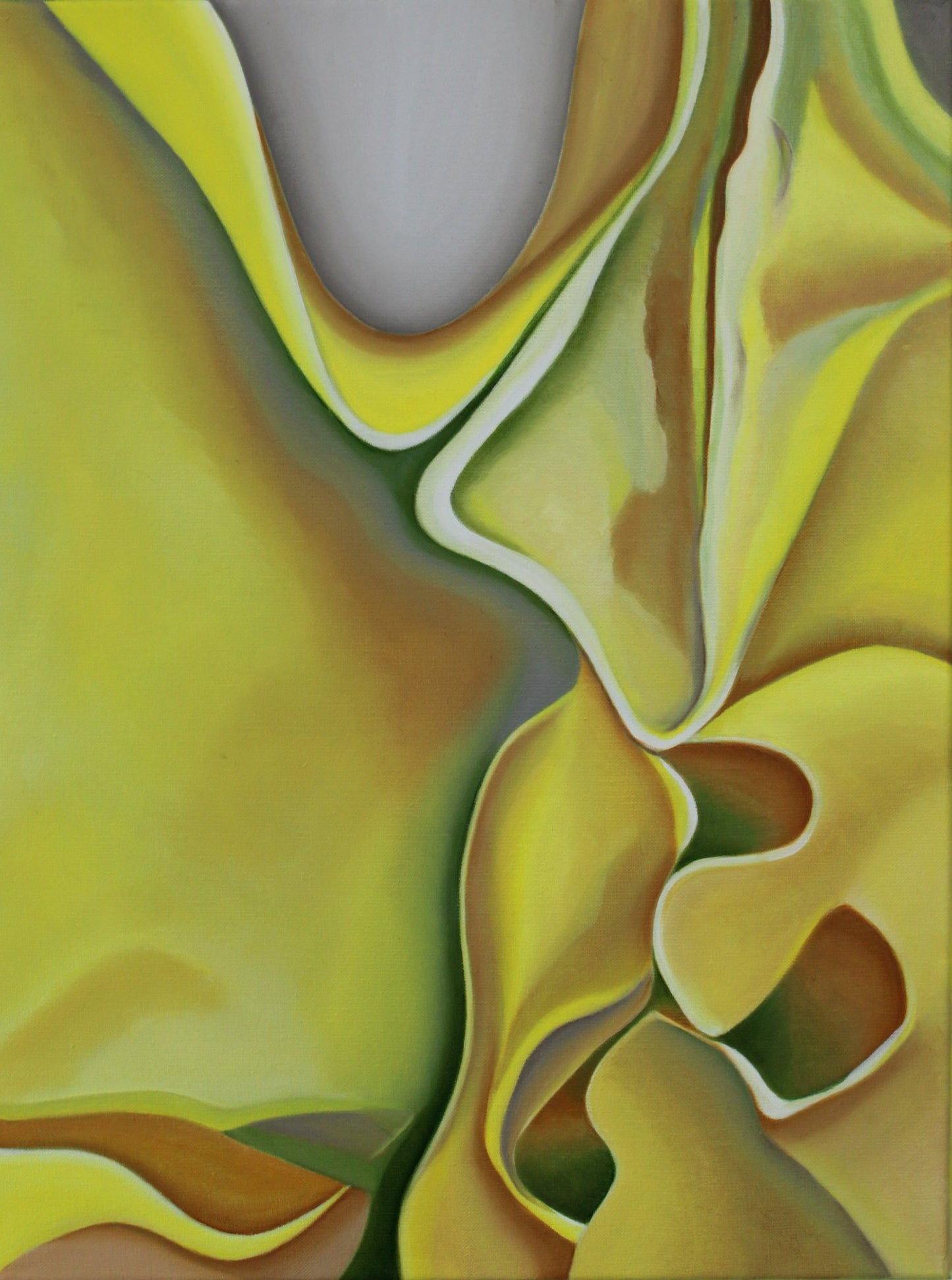
MIMOSA DE PARIS FORTHISIA

MIMOSA DE PARIS FORTHISIA

États-Unis d’Amériques

JChadima

Peinture

Style : Abstrait

Huile, Toile de lin, 2024

61 cm x 46 cm

Prix habituel $4,238.00 USD
Prix habituel Prix promotionnel $4,238.00 USD
Promotion Vendue
Frais d'expédition calculés à l'étape de paiement.

Envois & Retours

  • Livraison professionnelle dans le monde entier, contrôlée par nos experts logistiques
  • Les frais d'expédition, taxes et frais de douane sont inclus dans le prix

Garantie

Horizon World Art garantit fiabilité et traçabilité.

Tous les artistes de la plateforme ont été spécialement sélectionnés et certifient ne vendre que des œuvres dont ils sont les auteurs. Quel que soit le support, l'œuvre est envoyée à l'acheteur avec un certificat d'authenticité. Les photographies sont numérotées et signées.

Chaque client peut recevoir une copie de son certificat d'authenticité en contactant contact@horizonworldart.com

Paiement

Avec Horizon World Art, vous pouvez payer en toute sécurité par carte bancaire ou virement bancaire.

Pour toutes transactions dépassant votre limite de crédit, contactez-nous. Nous sommes tenus de vérifier chaque transfert, dans le cadre de la lutte contre la fraude et le blanchiment d'argent.

Prix

Les prix Horizon World Art incluent ce qui suit :

  • Prix d'une œuvre défini par un artiste
  • Assurance. Votre commande est protégée à 100% en cas de dommages ou de perte
  • Préparation des frais de douane, des taxes et des documents
  • Frais d'expédition du prestataire logistique
  • Un spécialiste du service client Horizon World Art qui répondra à toutes vos questions ou préoccupations lors de l'expédition
Œuvre unique signée Avec certificat d'authenticité
Livraison A l'international par des spécialistes
Paiement sécurisé Carte bancaire avec cryptage SSL
Afficher tous les détails

A propos de l'oeuvre

MIMOSA DE PARIS (FORSYTHIA)

Mimosa de Paris Forsythia originates in an encounter with early spring at the Jardin des Plantes in Paris. Photographed against a grey, subdued day, the forsythia became striking precisely because of its contrast with the surrounding atmosphere. Its unexpected intensity of yellow suggested a moment of renewal—a small but powerful interruption of winter that signals the arrival of a new season.

Rather than reproducing the plant literally, JCHADIMA transforms the observed structure of the forsythia into an abstract composition of flowing contours, organic shapes, layered surfaces, and saturated colour. The vertical and curving forms retain a connection to branches and emerging growth, yet their botanical identity is gradually reduced as they become elements within a more graphic and spatially ambiguous composition.

The dominant yellow and green tones create a sense of luminosity and vitality, while warmer ochre and brown passages introduce depth and contrast. Pale, almost white contours trace the edges of the forms, emphasizing their sculptural quality and directing the eye through the composition. The resulting colour relationships suggest both the physical presence of the plant and the heightened perception of encountering it against a grey urban landscape.

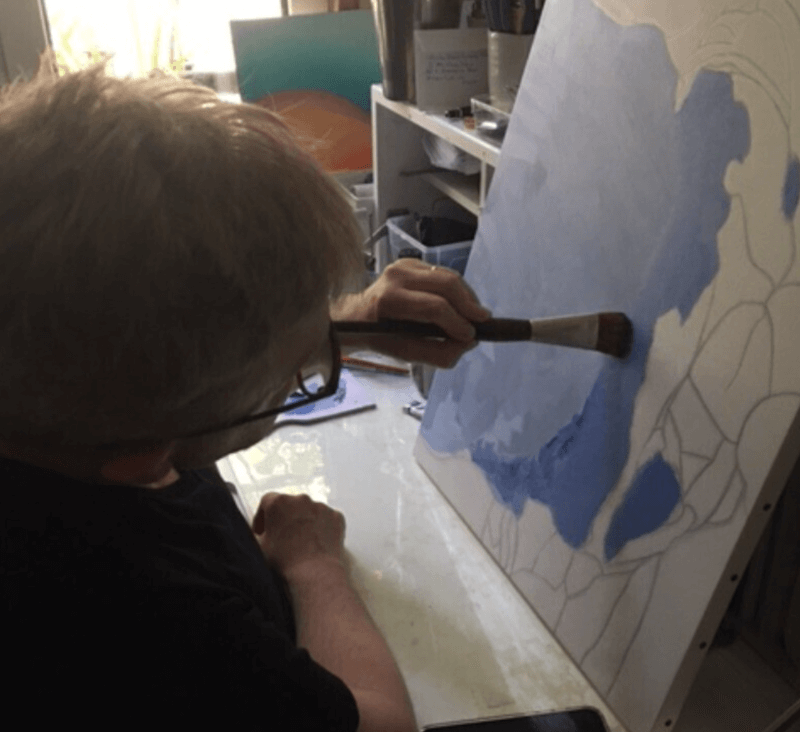
The painting is grounded in photography, but the photographic observation serves only as the point of departure. JCHADIMA extracts line, form, shape, colour, and texture from the original encounter and reorganizes them through painting. In this process, observation becomes transformation: the specific plant becomes a visual language of rhythm, movement, light, and organic geometry.

The simplified forms also create a tension between recognition and abstraction. The viewer may sense branches, leaves, and flowering structures within the composition, but these references remain deliberately unresolved. Nature is present not as botanical description but as an underlying structure from which the painting develops.

Within JChadima’s broader exploration of overlooked moments in the natural world, Mimosa de Paris Forsythia reflects his interest in finding unexpected beauty within ordinary surroundings. The painting transforms a brief encounter on a grey Parisian spring day into a luminous meditation on renewal, anticipation, and the quiet persistence of nature.

Ultimately, the work proposes that even the smallest interruption of colour can change the way a landscape is perceived. The solitary brilliance of the forsythia becomes a visual metaphor for spring itself—a moment when nature quietly announces that something new has begun.

“Against the grey of winter, a burst of yellow announces the return of light.”


Provenance:

CERTIFICATE OF AUTHENTICITY N° 20241009122907

AKOUN CERTIFIED: 3800 Euros  
À propos de l’œuvre

MIMOSA DE PARIS (FORSYTHIA)

Mimosa de Paris Forsythia originates in an encounter with early spring at the Jardin des Plantes in Paris. Photographed against a grey, subdued day, the forsythia became striking precisely because of its contrast with the surrounding atmosphere. Its unexpected intensity of yellow suggested a moment of renewal—a small but powerful interruption of winter that signals the arrival of a new season.

Rather than reproducing the plant literally, JCHADIMA transforms the observed structure of the forsythia into an abstract composition of flowing contours, organic shapes, layered surfaces, and saturated colour. The vertical and curving forms retain a connection to branches and emerging growth, yet their botanical identity is gradually reduced as they become elements within a more graphic and spatially ambiguous composition.

The dominant yellow and green tones create a sense of luminosity and vitality, while warmer ochre and brown passages introduce depth and contrast. Pale, almost white contours trace the edges of the forms, emphasizing their sculptural quality and directing the eye through the composition. The resulting colour relationships suggest both the physical presence of the plant and the heightened perception of encountering it against a grey urban landscape.

The painting is grounded in photography, but the photographic observation serves only as the point of departure. JCHADIMA extracts line, form, shape, colour, and texture from the original encounter and reorganizes them through painting. In this process, observation becomes transformation: the specific plant becomes a visual language of rhythm, movement, light, and organic geometry.

The simplified forms also create a tension between recognition and abstraction. The viewer may sense branches, leaves, and flowering structures within the composition, but these references remain deliberately unresolved. Nature is present not as botanical description but as an underlying structure from which the painting develops.

Within JChadima’s broader exploration of overlooked moments in the natural world, Mimosa de Paris Forsythia reflects his interest in finding unexpected beauty within ordinary surroundings. The painting transforms a brief encounter on a grey Parisian spring day into a luminous meditation on renewal, anticipation, and the quiet persistence of nature.

Ultimately, the work proposes that even the smallest interruption of colour can change the way a landscape is perceived. The solitary brilliance of the forsythia becomes a visual metaphor for spring itself—a moment when nature quietly announces that something new has begun.

“Against the grey of winter, a burst of yellow announces the return of light.”


Provenance:

CERTIFICATE OF AUTHENTICITY N° 20241009122907

AKOUN CERTIFIED: 3800 Euros  

fallback text for a video
A propos de l'artiste Jchadima

JChadima (James Chadima) is a Paris-based multidisciplinary artist whose work has been exhibited and collected internationally.

Born in Wisconsin, United States, JChadima studied at the University of Southern Colorado (USC), now Colorado State University Pueblo, where he earned several degrees. He began exhibiting and selling his work at an early age, establishing the foundations of a multidisciplinary practice in which drawing, painting, and photography would become closely intertwined.

His artistic formation was shaped by an important pedagogical lineage extending into twentieth-century American Modernism and fine-art photography. Particularly influential were his studies with Professor John Henry Johnson, whose guidance helped JChadima cultivate a more discerning way of seeing—one that looked beyond the immediate subject to recognize the expressive potential of light, form, structure, and details that might otherwise escape notice. Johnson’s personal relationships and correspondence with Ansel Adams and others associated with the American Modernist movement provided JChadima with an important connection to an earlier generation. This formative experience situated his developing vision within a broader dialogue with American Modernist figures such as Alfred Stieglitz, Georgia O’Keeffe, Arthur Dove, and Adams, whose work demonstrated how close observation and individual perception could transform familiar subjects into powerful vehicles for abstraction and expression.

Photography is both the initial stage and an integral component of JChadima’s creative process, functioning as an independent medium as well as a means of visual discovery. His subjects are drawn from nature, still life, urban and environmental surroundings, and the broader cultural landscape of contemporary life. Through the camera, he isolates relationships of light, line, form, colour, pattern, and texture, revealing visual structures that can easily pass unnoticed. These photographic impressions often provide the initial impetus for his paintings, in which recognizable imagery is distilled, reorganized, and transformed through abstraction. The resulting compositions are highly stylized and graphic, distinguished by structural clarity, rhythmic relationships, and a vibrant use of colour.

Central to JChadima’s philosophy is a belief in a “hidden magic” within our surroundings and ourselves. His focus on modest, familiar, and frequently overlooked subjects reflects a desire to recover a sense of wonder increasingly obscured by the visual noise, accelerated pace, and environmental pressures of contemporary life.
The ordinary is not simply recorded; it becomes material for reconsideration and transformation.

A tree, leaf, flower, architectural detail, or fragment of landscape becomes more than a recognizable subject. Through isolation and abstraction, a single detail can reshape our perception of the whole, while forms drawn from nature evoke both their inherent beauty and fragility in the face of growing environmental pressures.

Ultimately, JChadima’s art invites us to pause and look again, revealing the extraordinary within the seemingly ordinary while renewing our awareness of nature and our relationship with it.

Recognized by AKOUN, an international art-market reference, JChadima holds an established international quotation for his work.

RECENT PUBLICATIONS:
https://louvreunbound.aflip.in/2a9d2d8df5.html#page/38